
Understanding Orgasms
What are Orgasms?
Orgasms are the experience of peak sexual arousal where sexual tension is released through the sudden, involuntary contractions of muscles and organs occur including the pelvic floor muscles, uterus, vaginal walls.
An orgasm is an involuntary reaction, for example, like a sneeze in that it cannot be “forced”. As much as you try to pretend to sneeze, you cannot force a real sneeze on. However, you can influence the conditions or expose yourself to certain triggers that may bring on the involuntary reaction of a sneeze.
Orgasms are highly unique and variable in that each individual experiences them differently and there is no single “right” way to enjoy an orgasm. There is variance between individuals, as well as within an individual. An individual may vary in their own experiences of orgasm from one to the next. Some individuals may experience an orgasm like a gentle wave, peaking and gently dissipating. Others may experience it as a crashing wave; others might describe it as a firework type experience in their body. Still, there are many other ways individuals describe the experience of orgasm. What matters most is your own experience of the peak of arousal, as enjoyable, and pleasurable. It is also important to consider that sexual intimacy can be pleasurable even in the absence of orgasm.
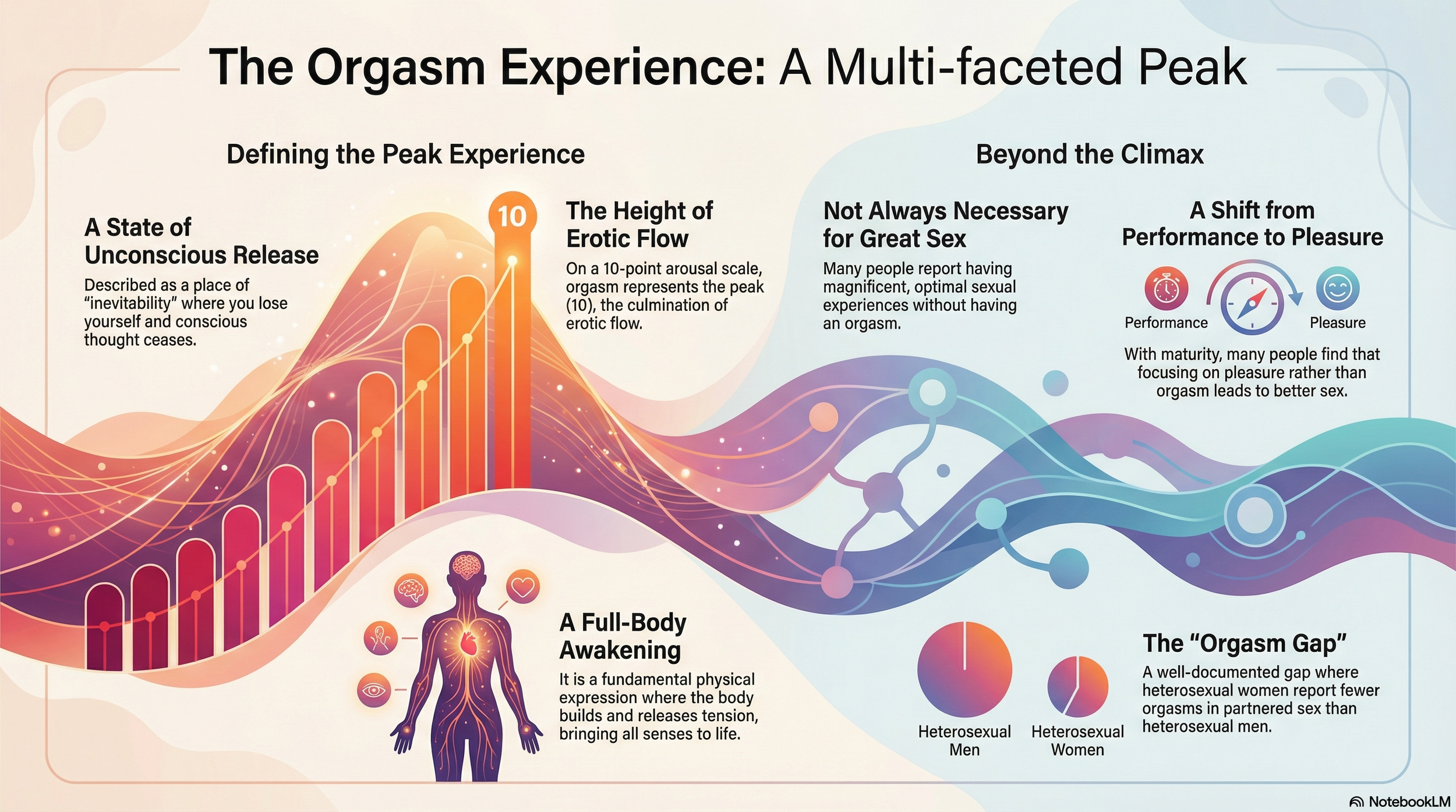
The Orgasm Experience
Penises and Orgasms
The glans penis (the “head”) is a site of sensitivity and pleasure. The most sensitive areas of the glans are the corona which is the ridge at the base of the glans, and the frenulum which is the V-shaped strip of skin on the underside of the glans connecting it to the shaft.
Ejaculation is a reflex triggered by nerves in the glans penis. Ejaculation mostly occurs simultaneously with orgasm. However, as a separate physiological event, it is possible to experience orgasm without ejaculation (“dry run” orgasm) or to ejaculate without orgasm.
After ejaculation and orgasm, there typically is a refractory period. The refractory period is a time where the penis cannot be restimulated to erection, ejaculation or orgasm regardless of stimulation. The body’s sexual system is essentially “shut-off” for recovery. This period changes over time, from brief in youth, to hours or even days in older age.
Vulvas and Orgasms
The clitoris is the primary site of sexual pleasure, containing approximately 10281 nerve endings (in contrast to the glans penis – the “head”, approx. 7688 nerve endings). The clitoris is more than an external structure; it also includes internal structures (“legs”- crura and bulbs) surrounding the vaginal entrance. Vaginal penetration, especially at the entrance of the vagina often stimulates the internal structures of the clitoris. Vaginal penetration is often reported to be even more pleasurable after the experience of orgasm, due to the engorgement of the clitoral complex.
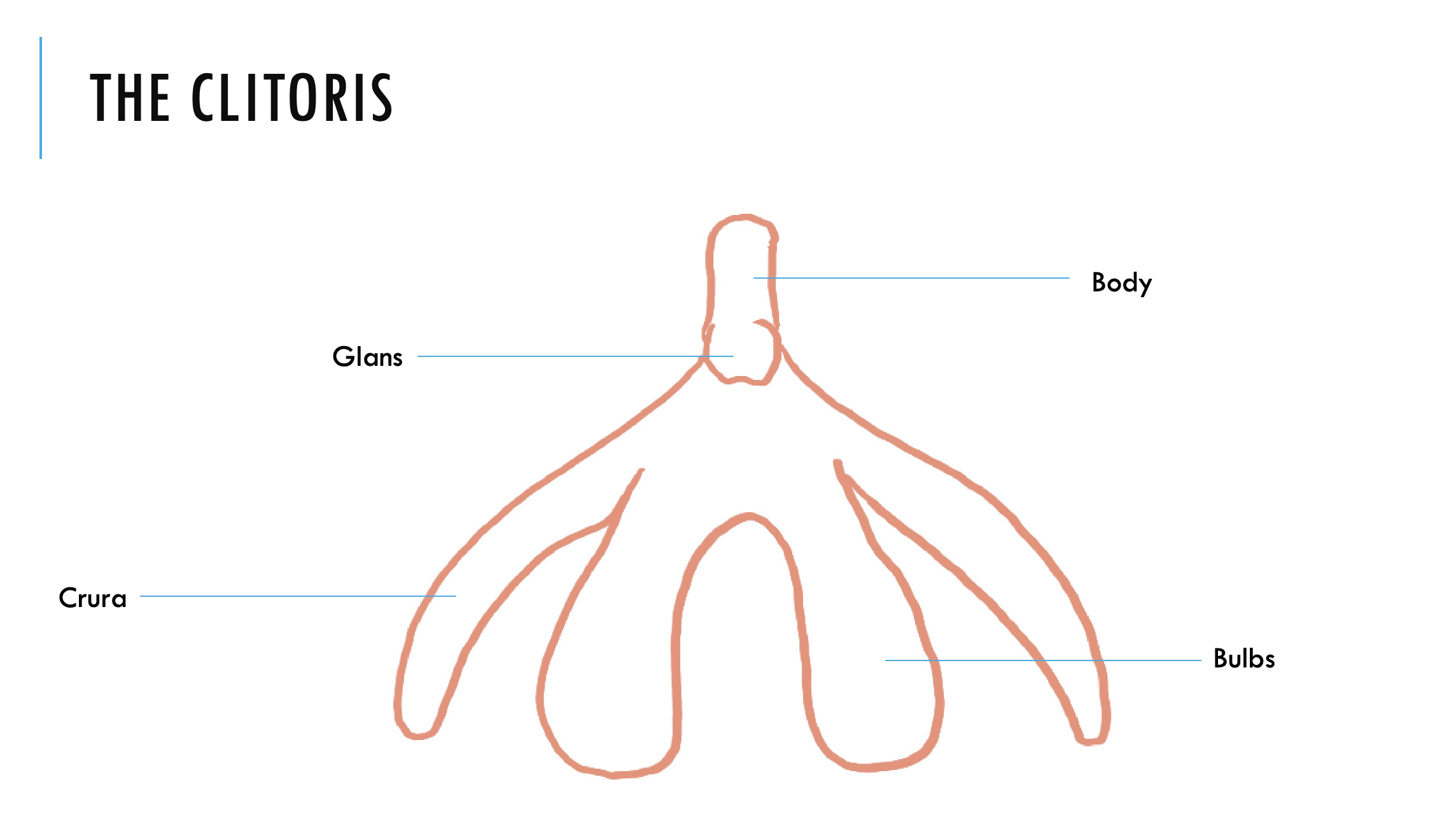
The Clitoris
While vaginal penetration is pleasurable, and increasingly so towards the entrance of the vagina (due to the internal structure of the clitoris and nerve endings), orgasms are most likely to occur with direct stimulation of the external clitoris. Less than 25% of women are reliably orgasmic during intercourse, a third sometimes experience orgasm during intercourse, and a third are never or almost never experience orgasm during intercourse.
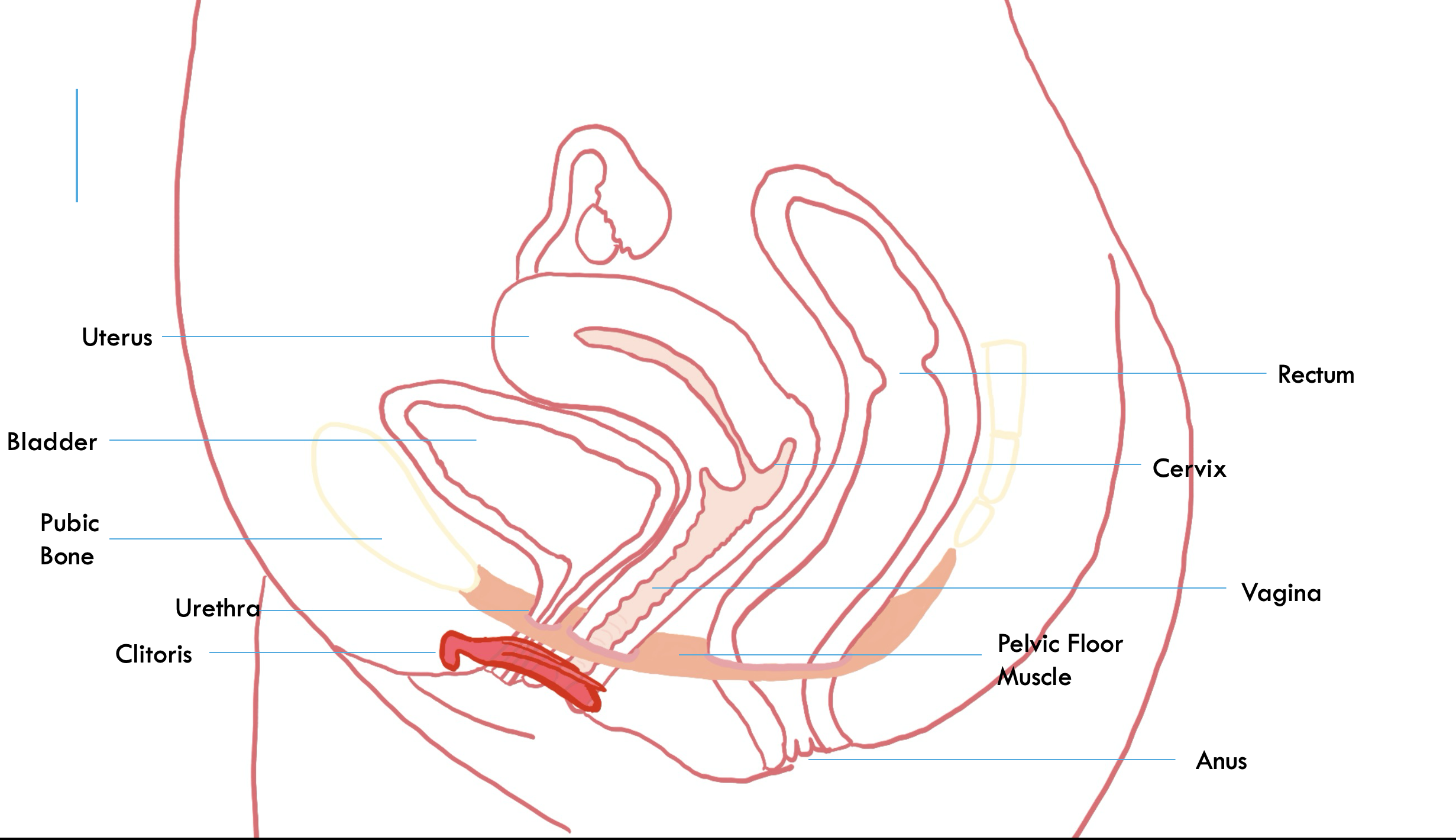
The Vagina and Internal Structures: note the clitoris and other erectile tissue surrounds the entrance of the vagina
Unlike penises which typically experience a refractory period, the clitoris may become hyper-sensitive to touch after orgasm, however, are commonly able to experience ongoing stimulation resulting in intensifying and multiple orgasms. Due to the hyper-sensitivity, the stimulation after orgasm may often need adaptation to be pleasurable, for example softer or indirect touch.
As the vulva, vagina, and pelvic floor muscles change with age, the experience of orgasm may also change.
What is required for Orgasm
While orgasms cannot be made, willed, or forced to happen (they are an involuntary reflex), certain conditions can heighten arousal, leading to orgasm.
Sufficient physical stimulation: adequate pleasurable stimulation, intensity, duration, and focus on the clitoris or surrounding pleasurable areas, or focus on the glans penis. Although, other erogenous body parts can also be sensitive to stimulation leading to orgasm (e.g. nipples).
Letting go mentally: Orgasm is a loss of control. Therefore, the willingness to lose yourself in the erotic experience is required. Trying to remain in control, judging performance, and monitoring yourself is a psychological brake that hinders arousal and therefore orgasm.
Pleasure over performance: Focusing on pleasurable sensations, erotic flow, the experience of arousal and enjoyment is required rather than achieving a “goal” or “outcome” of orgasm. The harder you try to achieve orgasm, the less likely it will happen. This is a distraction to enjoyment and pleasure, which is required for orgasm.
The golden quartet: For women, orgasms are most likely to occur through the direct stimulation of the clitoris through oral sex, the use of sex toys (adequate stimulation), manual stimulation, and when deep kissing is involved (high levels of eroticism and intimacy).
Why Orgasms Can Feel Difficult or Inconsistent
Difficulties with orgasm are common and can occur at different stages of life or relationships. Factors that may impact orgasm include stress, fatigue, anxiety, relationship dynamics, past experiences or trauma, body image concerns, health conditions, medication, hormonal changes, and cultural or religious messaging about sex.
It’s also important to remember that variability is normal. Orgasms can change over time, feel different from one experience to the next, or be influenced by context and connection. Struggling with orgasm does not mean something is “wrong” with you.
How Sex Therapy Can Help
Sex therapy provides a supportive, non-judgmental space to explore concerns around orgasm, pleasure, and intimacy. Rather than focusing on “fixing” the body, sex therapy often works to reduce pressure, increase understanding, and reconnect individuals or couples with their own experience of pleasure.
Final Reflection
Orgasms are one expression of sexual pleasure. They are not a test, a requirement, or a measure of worth. Approaching sexuality with curiosity rather than judgement allows space for growth, connection, and enjoyment. If questions or concerns about orgasm are impacting your wellbeing or relationship, support is available. I offer online Sex Therapy across Australia supporting individuals and couples in their experience of sexual wellbeing.
