
Online EMDR Therapy
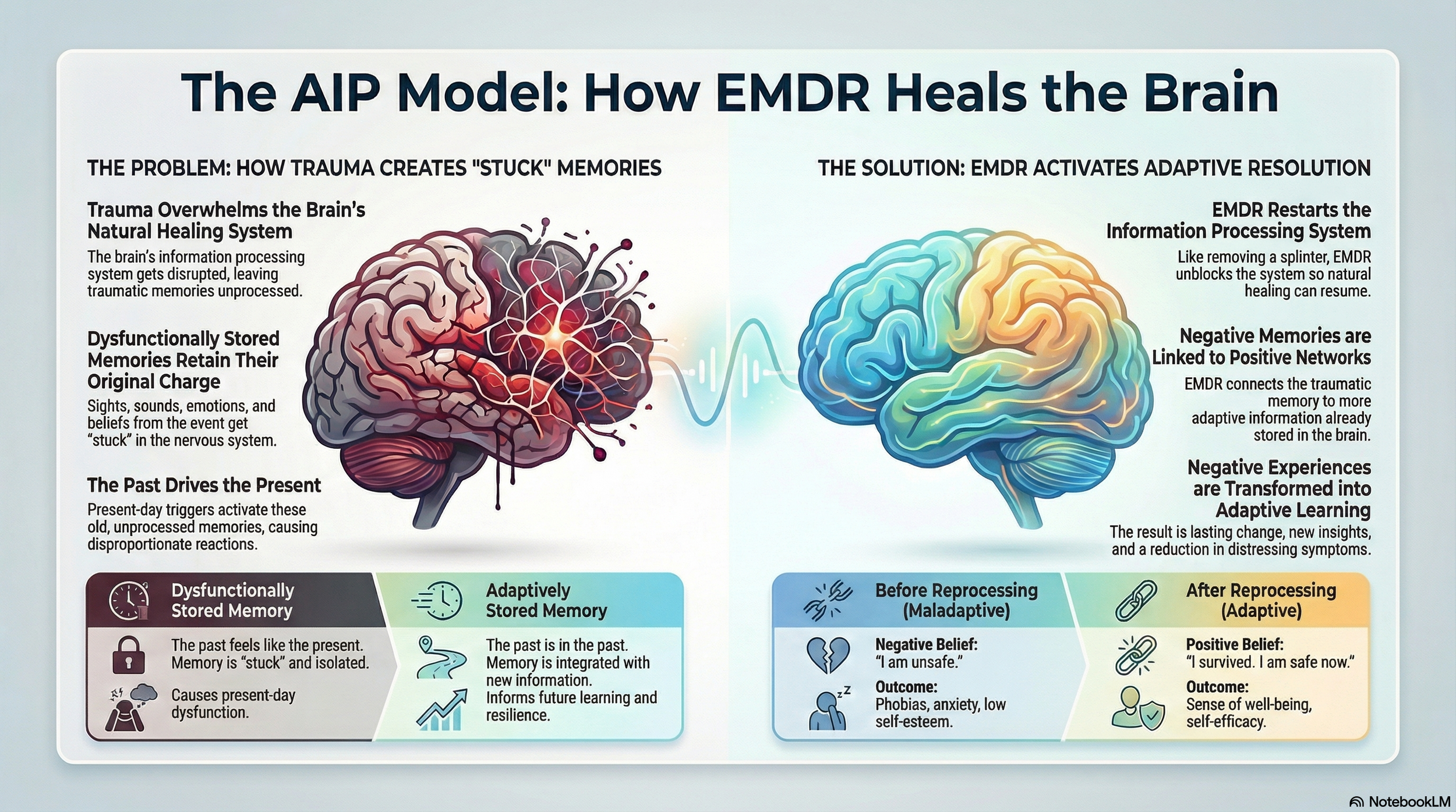
Adaptive Information Processing
EMDR
EMDR stands for Eye Movement Desensitisation and Reprocessing.
EMDR therapy is designed to support individuals in processing distressing or overwhelming experiences that continue to impact their emotional wellbeing, relationships, or daily functioning. It provides a structured approach to working with memories, beliefs, emotions, and body responses that are traumatic, or that may feel “stuck” or unresolved.
EMDR does not involve sharing or reliving experiences in detail, nor does it rely solely on talking through events. Instead, it supports the brain’s natural capacity to process experiences in a way that reduces emotional intensity and allows for greater integration and meaning-making.
Topics of concern may include:
Single-incident trauma (such as accidents, medical trauma, assaults, or sudden loss)
Complex or developmental trauma
PTSD and trauma-related symptoms
Distressing or intrusive memories
Childhood experiences that continue to impact adult functioning
Past events and experiences that continue to negatively affect functioning in the present
Sexual assault and abuse
Addictive behaviour
Negative beliefs about self
EMDR sessions may explore:
Distressing memories or experiences (at a pace that feels manageable)
Associated beliefs about self, others, or the world
Emotional and physiological responses held in the body
Present-day triggers linked to past experiences
Internal resources and grounding strategies
Adaptive beliefs and new ways of relating to experiences
Future goals
Session frequency:
EMDR is a powerful therapy with the capacity to stimulate healing, which can involve sensitive emotions, memories or other sensations resurfacing. For this reason, it is optimal at the memory processing stage to have weekly sessions for EMDR. You can book multiple sessions in advance. Fortnightly sessions or longer in between for processing, would only be considered in specific circumstances.
Important note:
EMDR is not always appropriate as a first-line intervention. Some individuals benefit from significant stabilisation work before engaging in trauma processing. EMDR is also not a crisis intervention. Where there is active domestic violence, unmanaged addiction, psychosis, severe dissosociation and significant dissociative disorders, or current high-risk presentation, alternative supports may be required and a referral will be made.
How do I know I’m ready for EMDR?:
You’re able to use calming or soothing strategies to settle your body if you become distressed, and you understand you can pause or stop the session at any time.
You are willing to think and feel about past experiences while also knowing you are safe here and now (actually, we do not have to start with past events- while this is the traditional approach, EMDR can be adapted. Read the following post).
You’re not in an active crisis, and you can attend sessions consistently, knowing emotions may continue to process between appointments.
You feel comfortable being honest about what comes up, even if it feels confusing, intense, or uncomfortable.
Any relevant medical conditions, pregnancy, or substance use have been discussed so EMDR can be done safely.
You’ve reflected on what healing might mean for your life and relationships, and you’re willing to make room for those changes.
If you have concerns about any of the above that’s okay! It doesn’t mean EMDR isn’t right for you, it simply means more preparation work may be needed first. This may include building coping skills, strengthening grounding strategies, and increasing your ability to stay present with emotions so the processing phase feels more steady and contained.
What is Bilateral Stimulation and How Does it Work?
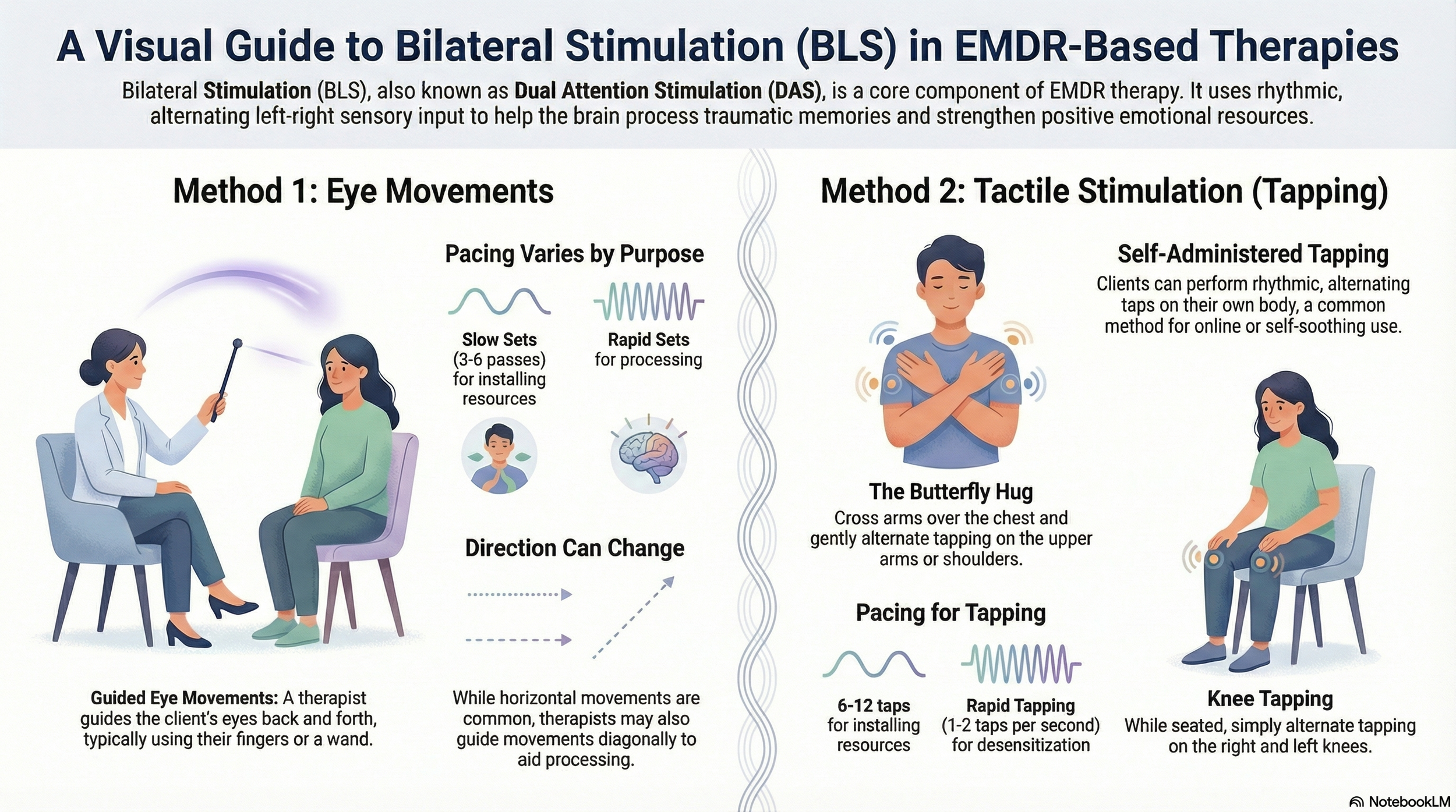
Bilateral Stimulation (BLS) is a core part of EMDR therapy. It refers to gentle, alternating stimulation of the left and right sides of the body or senses. This can include guided eye movements by following my fingers with your eyes, alternating tapping, or other rhythmic back-and-forth forms of stimulation.
BLS is used while focusing on a memory, thought, or body sensation. Its role is to support the brain’s natural ability to process experiences in a way that feels more integrated and less emotionally distressing over time.
How does BLS work?
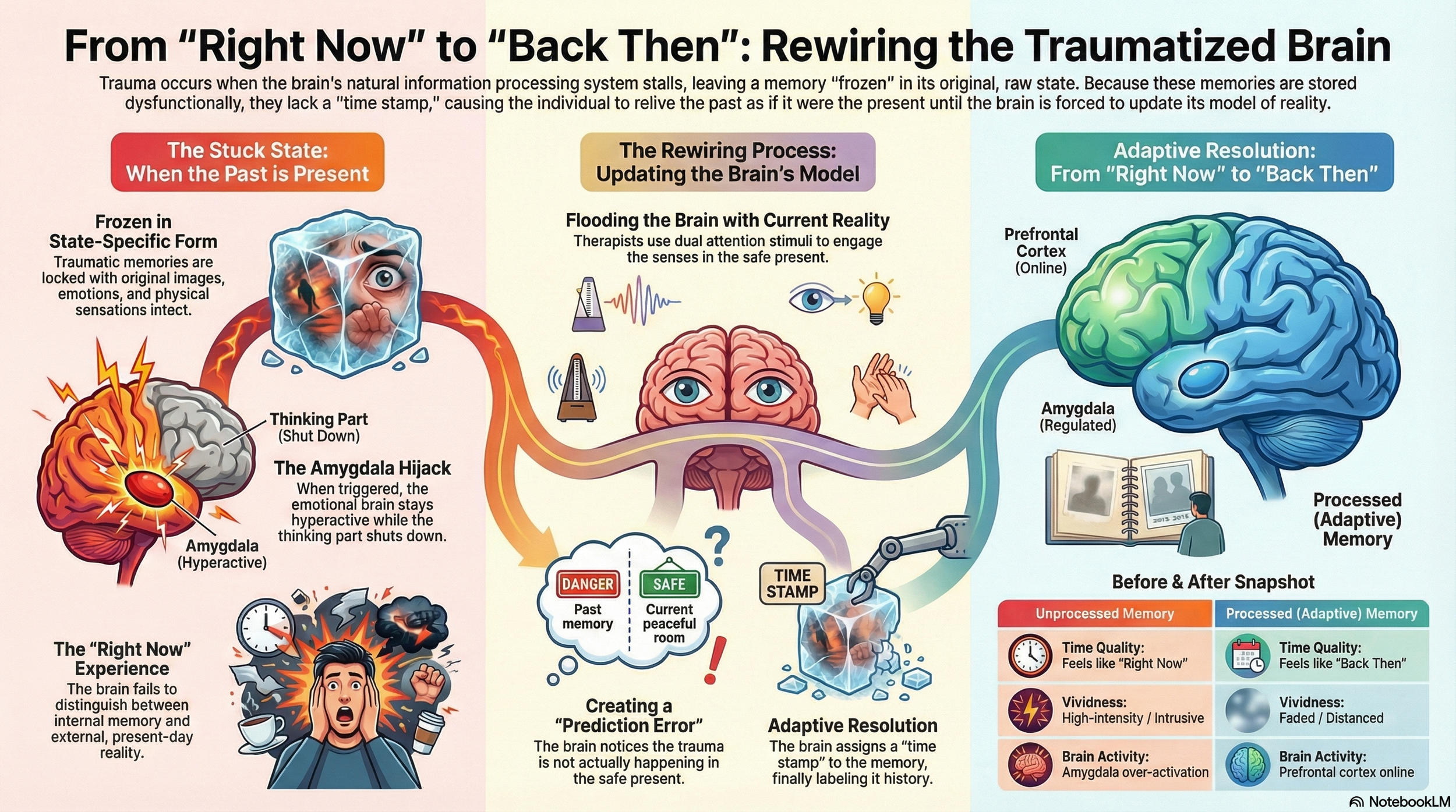
When we experience overwhelming or traumatic events, the brain may not fully process the experience at the time. As a result, memories can remain “stuck,” continuing to trigger strong emotional or physical reactions in the present. It is similar to a physical wound that hasn't healed because there is debris inside; the memory is festering because it hasn't been fully digested by your brain.
BLS is theorised to work by simultaneously focusing on the past experience and the present moment. The strengthening of the connection with the present moment is essential in untangling from the distress of the memory. Furthermore, this 'dual attention' appears to tax your brain's working memory because your brain is focusing on the present moment and the memory at the same time. Through taxing working memory, the distressing memory naturally becomes less detailed, vivid and less emotionally charged.
Another way to put it is that past traumatic memories trick the brain into thinking they are present realities, happening now. So what we need to do is flood the brain with the current present reality, so that the past memory is drowned out by the present reality. In doing this, the brain learns that the past memory, is in fact a past memory, and not present reality. In the trauma processing stage where the aim is to desensitise and distance the memory, in addition to eye movements, other activities may be added to “flood” the brain with the present. This could include using tapping at the same time, and spelling or counting tasks.
Prior to processing the negative memories, work has been done to identify and strengthen positive networks in the preparation phase. Once the negative memory is desensitised, BLS is then used to pair positive beliefs with the negative memory. Through BLS previously stuck and isolated negative networks now link in with positive ones, leading to the adaptive learning and interpretation of past events. There is a saying in neuroscience: "Neurons that fire together, wire together." By linking the old memory with your new, positive truth during BLS, we are hard-wiring this healthy perspective into your brain so that it becomes your automatic response in the future.
Online EMDR
$160/Session (50 mins)
Members of the following Private Health Funds may be eligible for rebates:
Bupa
HCF
AHM
Medibank
ARHG (Police Health Fund, Emergency Services Health, Phoenix Health, St Lukes Health, GMHBA, see-u by HBF, Teachers Union Health, AIA, Doctors Health Fund and Westfund)
I am also registered with WorkCover QLD
My services are not covered by a MHCP/medicare.
Session Structure:
Individual sessions and their structure are highly influenced by the presenting needs of the individual. However, EMDR is a structured therapy which follows 8 clear phases. These phases help ensure therapy is paced, safe, and responsive to your individual needs. Not every phase looks the same for every person, and EMDR does not mean moving through these stages quickly or rigidly.
Before session 1:
You will receive some forms and assessments to complete. This allows me to have an understanding of your mental health and wellbeing history, as well as your suitability and readiness for EMDR. Sometimes a modified version of EMDR (such as contained or restricted EMDR) may be more appropriate in your circumstance.
Setting up EMDR
Phase 1: History-taking and assessment
We begin by exploring your history, current concerns, and goals for therapy. This includes understanding past experiences, present triggers, strengths, and supports. Together, we assess whether EMDR is appropriate at this time and what pace would feel manageable.
This can take approx 2-4 sessions.
Phase 2: Preparation
Before any trauma processing begins, we focus on building calm and stability. This phase includes learning grounding strategies, strengthening internal skills, and developing a shared understanding of how EMDR works. Preparation may take several sessions and is an essential part of the process.
Stabilisation may be a significant part of the preparation phase, especially if you are experiencing heightened emotional distress or currently challenging life circumstances. This phase may look more like traditional therapy, and I may integrate skills from an array of approaches including Acceptance and Commitment Therapy and Dialectical Behaviour Therapy.
This phase may range from one session for some, and months for others.
Phase 3: Assessment (Identifying target memories)
When you are ready, we collaboratively identify specific memories, experiences, or themes to work with. These are chosen carefully and may relate to past events, present triggers, or future situations you want to feel more equipped to handle.
Processing Memories with EMDR
These following phases can all occur in one session, but may vary depending on the natural timing required to process a memory.
To learn more about what a processing session actually looks like/how it works. See following video. https://youtu.be/ZN15IrxNrFE
Phase 4: Desensitisation
This phase involves focusing on the selected memory and gently processing while using bilateral stimulation (such as eye movements or alternating tapping). You are not required to recount details aloud. The focus is on noticing whatever arises: thoughts, emotions, sensations, while the distress associated with the memory gradually reduces.
Phase 5: Integration
As distress decreases, we work to strengthen more positive beliefs about yourself or the experience. This supports the integration of new perspectives and already existing positive networks that feel more aligned with how you want to relate to yourself and your history.
Phase 6: Body scan
We check in with the body to notice any remaining tension or discomfort linked to the memory. If needed, this is processed further to support a sense of completion and ease.
Phase 7: Debrief & Closure
Each session ends with a debrief and grounding. You leave the session feeling settled, oriented, and supported, even if processing is incomplete and continues over multiple sessions. You will be given a log to record what you notice between sessions.
Phase 8: Re-evaluation
At the start of subsequent sessions, we review how things have felt since the previous session, reflecting on your log. This helps guide next steps, whether that involves further processing, integration work, or returning to resourcing and support.
What does BLS feel like?
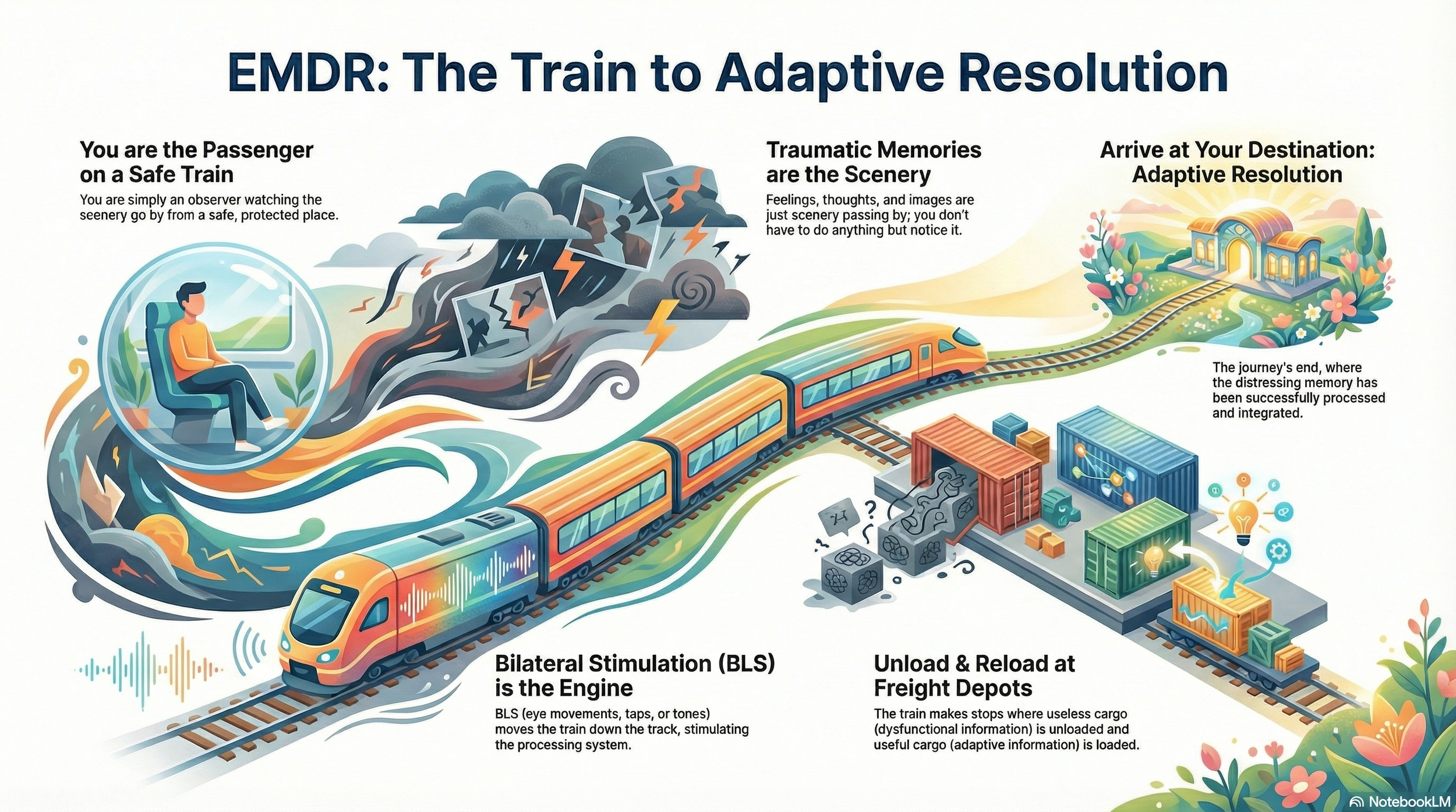
When processing the memory, you do not need to analyse, verbally explain, or relive the event in detail. Think of it like riding on a train: the memory is just scenery passing by the window. You don't have to get out and interact with it; you just watch it pass. The focus is on noticing whatever arises: thoughts, emotions, or sensations, while the brain does the processing work.
People experience BLS differently. Some notice shifts in emotions or physical sensations, others notice changes in thoughts or images. There is no “right” experience. Processing may feel subtle or more noticeable at times, and this can vary from session to session.
Importantly, you remain fully present and in control throughout. We regularly pause to check in, and the pace is always adjusted to what feels manageable for you.
BLS is not hypnosis and does not involve loss of control. You can stop, slow down, or change the approach at any point. If something feels too much, we return to grounding and stabilisation.
BLS is only introduced when you have the skills and supports needed to engage safely, and it may not be used in every session.
What to Expect from EMDR?
My approach to EMDR
My approach to EMDR is trauma-informed, collaborative, and paced with care. I prioritise emotional safety, consent, and choice at every stage. EMDR is offered as one therapeutic tool within a broader counselling framework, and may be integrated with approaches such as Acceptance and Commitment Therapy (ACT), Trauma-Focused ACT, and Compassion-Focused Therapy (CFT).
I have completed accredited EMDR training and engage in ongoing case consultation to support ethical and effective practice. I am a full member with EMDRAA . Referrals are made where additional or specialised support is required.
In this video I explain what to expect from EMDR therapy, including the 8 phases of EMDR.
In this video I explain what an EMDR processing session looks like, in terms of what you will be doing, and what I will be doing.